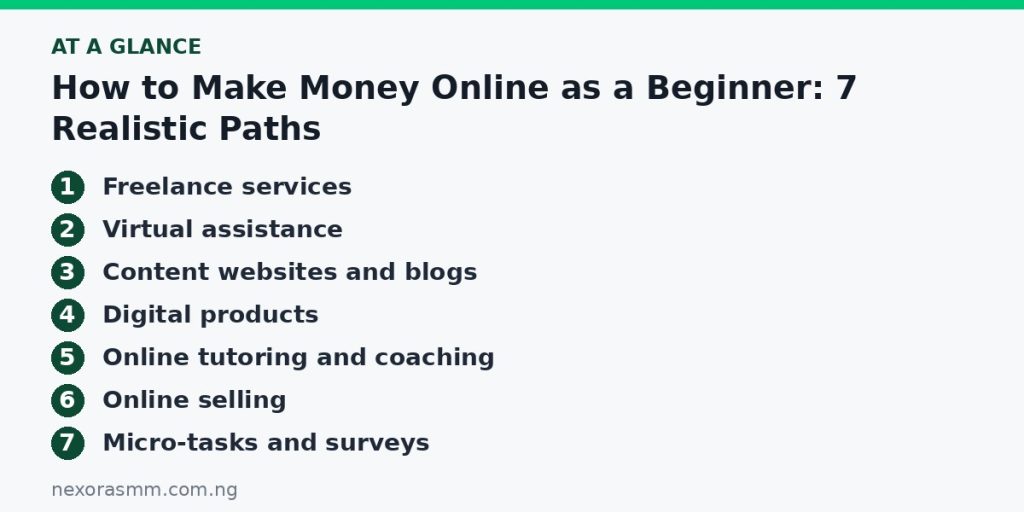
How to Make Money Online as a Beginner: 7 Realistic Paths
Search for ways to earn money on the internet and you will find two kinds of advice: vague promises of “passive income” and complicated courses that cost more than you can afford. This guide sits in the middle. It explains the seven most realistic paths for a beginner, what each one actually requires, and how long you should expect to wait before seeing your first payment.
One honest note before we start: nobody earns money online without trading something for it. You are trading time, skill, attention or a small amount of capital. The paths below differ mainly in which of those you spend first.
1. Freelance services
Freelancing means doing a task for a client who pays you directly. Writing, editing, graphic design, video editing, bookkeeping, translation and social media management are common examples. It is the fastest route to your first payment because you are selling a skill you may already have, and you do not need an audience.
The catch is that you earn only while you work. Your income is capped by your hours until you raise your prices or start working with a small team.
2. Virtual assistance
A virtual assistant handles the repetitive tasks that busy business owners do not have time for: scheduling, inbox management, data entry, research and customer replies. If you are organised and reliable, this is one of the easiest services to start because the entry bar is low and demand is steady.
3. Content websites and blogs
A blog can earn through display advertising, sponsorships or your own products. It is also the slowest option. Most new sites need months of consistent publishing before search engines send meaningful traffic. Treat a blog as a long-term asset, not a quick fix, and publish about a topic you can write about for years.
4. Digital products
Templates, planners, checklists, short guides and mini-courses are created once and sold many times. The work is front-loaded: you spend weeks building something useful, then selling it costs you very little time per customer. The difficult part is getting people to find it, which is why many creators pair products with a blog or social profile.
5. Online tutoring and coaching
If you are strong in a school subject, a language, a software tool or a professional skill, you can teach it. Tutoring marketplaces bring students to you, and you can also find clients through local groups and social media. Prices are set by the value of the result you help someone achieve, not by the hours you put in.
6. Online selling
Reselling products, selling handmade goods or running a small shop needs capital for stock and time for logistics. It can work well if you have access to a product people want and a reliable way to deliver it, but it is rarely the easiest place for a complete beginner with no budget.
7. Micro-tasks and surveys
Paid surveys, user-testing sessions and small online tasks exist, but the pay per hour is usually very low. They can top up a small budget while you build a real skill; they are not a long-term plan.
How to choose your first path
Ask yourself three questions:
- What can I already do that someone would pay for? Start there. A skill you already have beats a skill you plan to learn.
- How soon do I need money? If you need income this month, freelancing or assistance is more realistic than a blog.
- How much can I spend? If the answer is nothing, avoid any path that asks you to buy stock or an expensive course before you have a customer.
A realistic first 30 days
Week one: pick one service and write a one-sentence offer, such as “I edit blog posts for small business owners.” Week two: create two or three samples that show what you can do. Week three: contact 20 people who might need that service, one message at a time and always personalised. Week four: follow up, improve your samples based on the replies, and send another batch.
Most people who quit do so after a few unanswered messages. Replies tend to come from the later rounds, once your offer is clearer.
Mistakes that cost beginners money
- Paying for a “system” that promises guaranteed income. Genuine opportunities do not need a guarantee.
- Trying five things at once, so none of them gets enough attention to work.
- Working for free for months. One or two free samples are reasonable; ongoing free work is not.
- Sending your personal details or paying a “registration fee” to get a job. Legitimate employers do not charge you to start.
Frequently asked questions
Do I need a laptop? It helps, but many tasks such as writing, tutoring and social media management can start on a good phone. A laptop becomes important when you handle longer documents, editing or design work.
How much money should I expect in the first month? There is no reliable figure. Some people earn their first payment within weeks; others need several months. Your skill, your offer and the number of people you contact all matter, so be wary of anyone who quotes a guaranteed monthly income.
Is a degree required? Rarely. Clients usually care about evidence that you can do the work: samples, testimonials and a clear explanation of how you would solve their problem.
Should I quit my job to do this? Not at the start. Build your online income alongside your current work, and only consider leaving once you have a steady pipeline of clients and savings that cover several months of expenses.
What about payment and tax? Use a safe, traceable payment method and keep a simple record of what you earn. Rules differ by country, so check the local requirements for declaring self-employed income.
Key takeaways
Start with a skill you already have, sell it to a small group of people, and improve with each reply. Slower paths such as blogs and products can be built alongside once you have some income to support them. Be patient, be sceptical of promises, and keep your costs close to zero until you have proof that someone will pay.
Educational content only — not financial advice. Income and savings results vary and are never guaranteed. How we write
Enjoyed this story?
Get the best stories delivered weekly.