How to Land Your First Freelance Writing Client

Getting your first paying writing client feels harder than it is. The difficulty is rarely your writing. It is that you have no track record, no portfolio and no idea where to find people who need words. This guide walks through the practical steps to land that first paid job, even if you are starting from nothing.
Decide what kind of writing you will offer
“I write anything” is a weak pitch. Clients hire people who understand their world. Choose a lane, for example:
- Blog posts for small businesses
- Product descriptions for online stores
- Email newsletters
- Website copy for local service providers
- Explainer articles about money, technology or health
Pick a topic you can discuss comfortably. If you have worked in a shop, a school or a clinic, you already understand a niche better than most writers.
Build three samples before you pitch
You do not need published work to show your skill. Write three short samples of 400 to 600 words each, aimed at the type of client you want. Make them real: choose an actual business, imagine its audience and write something it could publish tomorrow. Put them in a simple document or a free one-page website.
Set a starting rate
Beginners usually price by the word or by the article. Keep your first price modest but not insulting; if it is too low, clients may assume the quality is low too. A good approach is to quote a fixed price per article, calculate how many hours it will take, and check the hourly result is one you can live with. You can raise your price after every two or three clients.
Where to find your first clients
People you already know. Friends, relatives and former colleagues often run small businesses or manage someone who does. Tell them clearly what you offer; many opportunities come from here.
Local businesses. Look at the websites of nearby companies. If the blog has not been updated for a year or the product pages are thin, send a short, polite message offering one specific improvement.
Freelance marketplaces. These platforms bring buyers and sellers together. Competition is high, so write a personal proposal for each job instead of pasting the same text. Mention one detail from the job post to show you read it.
Social platforms. Professional networks and writer communities are useful for finding leads. Share a helpful tip or a sample once or twice a week instead of only announcing that you are available.
How to write a pitch that gets replies
A good first message is short. Use this structure:
- One line showing you looked at their business (“I read your post on packing for rainy-season deliveries”).
- One line naming a specific problem you can help with.
- One link to a relevant sample.
- A simple question, such as “Would you like me to send two topic ideas?”
Avoid long biographies and avoid apologising for being new. Your sample does the persuading.
Protect yourself
- Agree on the scope, price and deadline in writing before you start.
- For a new client, ask for a deposit or split the work into two payments.
- Never pay to receive a writing job, and be cautious about anyone who sends you a cheque or asks for sensitive personal details.
- Be wary of unpaid “test projects” that are long enough to be real work.
Deliver well so one client becomes three
Your first client is also your best source of the next one. Deliver on time, follow the brief and make one round of reasonable edits without complaint. When the project ends, ask politely for a short testimonial and for an introduction to anyone else who might need help. A short, honest testimonial on your page is worth more than any claim you could write about yourself.
Common mistakes
- Waiting until you feel ready. You will improve fastest on real briefs.
- Pitching too few people. Expect many messages to receive no answer.
- Copying text from the internet. Plagiarism ends careers. Always write your own words and credit your sources.
- Ignoring the basics. Check spelling, keep sentences clear and read your work aloud before sending it.
Frequently asked questions
Do I need a degree in English or journalism? No. Clients care about clear, accurate writing that fits their audience. Your samples matter more than a certificate.
How many words is a good first sample? Between 400 and 700 words is enough to show your structure, tone and research without taking days to write.
Should I use AI tools in my writing? They can help with brainstorming and outlines, but clients expect original, accurate work that sounds like a real person. Check every fact yourself, rewrite in your own voice and follow any rules a client sets about tools.
What if a client does not pay? Prevention is the best protection: written agreement, deposit and staged payments. If a client still disappears, send a polite reminder with the invoice, then a firm final notice. Stop delivering the next stage until payment arrives.
How do I deal with writer’s block? Create an outline first, set a short timer and write a rough draft without editing. It is easier to improve a messy draft than to stare at a blank page.
When should I raise my rates? A sensible time is after two or three satisfied clients, or when you are consistently turning down work because you are busy. Raise prices for new clients first, and give existing clients notice before any change.
Key takeaways
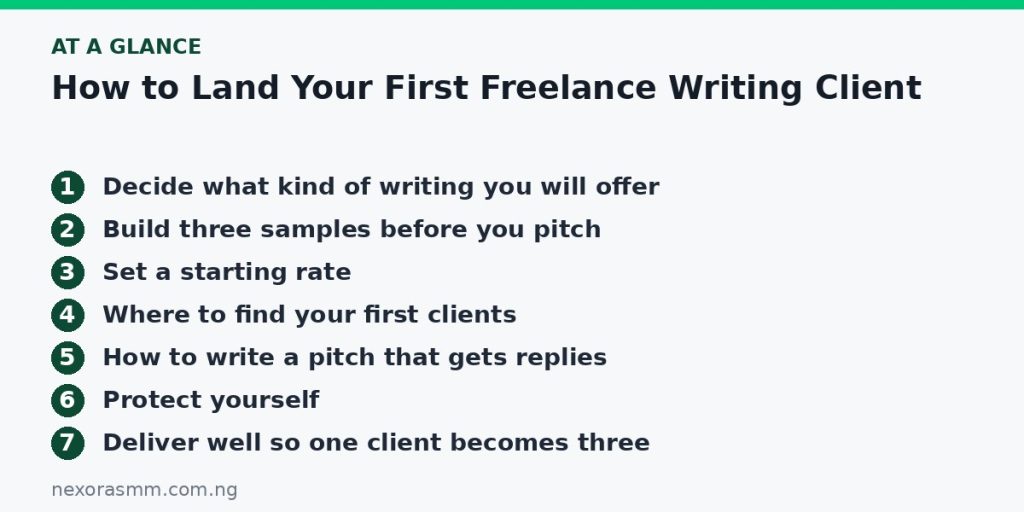
Choose a lane, write three targeted samples, set a fair starting price and send personalised pitches every week. Treat your first client as the start of a track record, not just a one-off job, and your income will grow with each project you finish well.
Educational content only — not financial advice. Income and savings results vary and are never guaranteed. How we write
Enjoyed this story?
Get the best stories delivered weekly.