How to Sell Digital Products Online Without Special Skills
Digital products are attractive because you build them once and can sell them many times without printing, storing or shipping anything. But “passive income” hides a lot of unglamorous work. This guide shows how to choose a product people will actually pay for, build it without special tools, and put it in front of buyers.
What counts as a digital product?
Anything a customer can download or access online. Popular formats include:
- Spreadsheet templates (budget trackers, invoice templates, content calendars)
- Printable planners and checklists
- Short guides and ebooks
- Presentation or document templates
- Video lessons or mini-courses
- Stock photos, icons or design elements you created yourself
Start with a problem, not a format
Most failed products begin with “I will make an ebook” instead of “people struggle with this, and I can help.” Spend a week listening. Read the questions people ask in online groups, comments on videos and forums in your niche. Look for the same problem appearing again and again. A freelancer who keeps asking “how do I track my invoices?” is a customer for an invoice template.
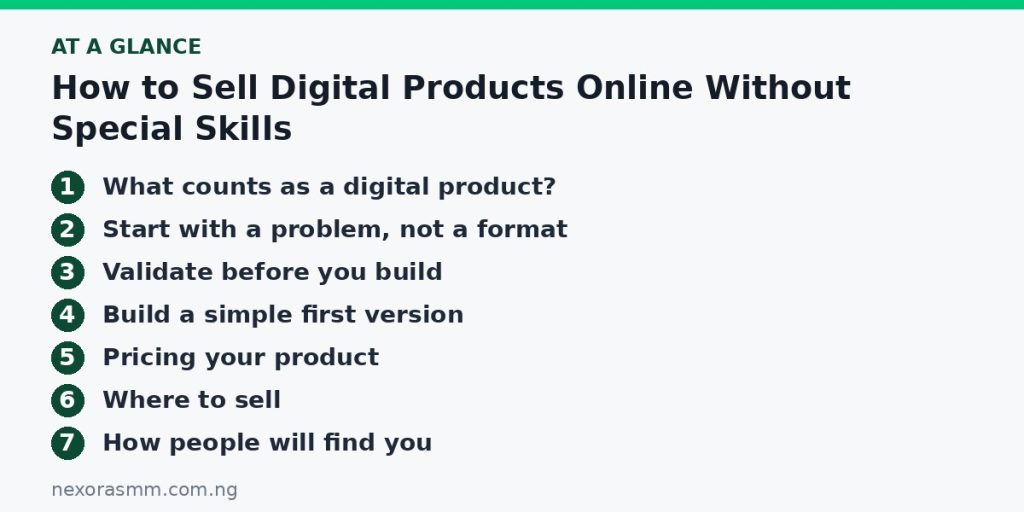
Validate before you build
Before spending weeks creating something, test whether anyone cares. Describe the idea in a short post or message to a small group and see how people respond. Better still, offer it as a pre-order at a discounted price. If nobody is interested in the description, a prettier product will not fix that.
Build a simple first version
Your first product should be small and focused. A ten-page guide that solves one specific problem is more useful than a hundred-page book that tries to solve everything. You can create most digital products with free or inexpensive tools: a word processor, a spreadsheet, a free design tool and a screen recorder.
Make it useful in the first five minutes. Include clear instructions, an example filled in, and a short “start here” page. Customers judge a product quickly, and good onboarding reduces refund requests.
Pricing your product
Do not price by how long it took you. Price by the value to the buyer. A template that saves a small business owner two hours a month is worth more than the cost of a coffee. Start with a modest price, collect feedback and raise it when the product improves. Offering a lower-priced “starter” version and a fuller “complete” version is a simple way to serve different budgets.
Where to sell
Marketplaces give you built-in traffic but take a fee and offer less control. Your own page on a simple storefront tool gives you more control and lets you build an email list. Many beginners start on a marketplace to learn what sells, then move to their own site once they have a few products.
How people will find you
The best product still needs visibility. Reliable ways to get found include:
- Writing helpful blog posts that answer questions your product solves, with a link at the end.
- Sharing short tips on social platforms where your audience spends time.
- Giving away one free sample (such as a basic version of your template) in exchange for an email address.
- Asking happy customers for honest reviews.
Legal and practical points
- Only sell work you created or have a licence to sell. Do not resell other people’s templates or images.
- Write a clear refund policy and a short licence stating whether buyers can share the file.
- Keep records of your sales for tax purposes and check the rules where you live.
Realistic expectations
Most first products earn little. That is normal. Your first product is a lesson in what customers want, and the second and third products are usually better. Creators who succeed usually keep improving their offers and listen to feedback, rather than waiting for a single product to take off.
Frequently asked questions
Do I need technical skills? Not much. If you can use a word processor or a spreadsheet and upload a file to a storefront, you can sell a simple product. Many platforms handle payment and file delivery for you.
How many products should I start with? One. Learn from the first customers, then add a second product that solves a related problem. A small collection of useful products is better than many unfinished ones.
What if someone shares my file for free? It happens. Use a clear licence, add your name or website inside the file and focus on service, updates and support that make buying from you more attractive than finding a copy.
Can I use AI tools to create products? You can use them to brainstorm or draft, but customers pay for accuracy and usefulness. Edit carefully, test every template yourself and never sell material you do not have the rights to.
How do I get my first sale? Offer the product to people who already know you, give it to a few people for honest feedback, and ask them for a short review. Early reviews make strangers much more willing to buy.
What if nobody buys? Check the problem, the description and the price. Ask people who looked but did not purchase what stopped them, then improve the product or the way you explain it.
Key takeaways
Choose a real problem, test interest before building, keep version one small and put it where your audience already gathers. Combine your product with helpful free content and build an email list so you do not depend on any single platform.
Educational content only — not financial advice. Income and savings results vary and are never guaranteed. How we write
Enjoyed this story?
Get the best stories delivered weekly.