7 Ways to Monetize a Blog (and When Each One Makes Sense)

A blog can earn money in more than one way. Relying on a single source, such as display ads, leaves you vulnerable when traffic falls or policies change. The best approach is to understand each option, match it to your audience and add streams gradually. This article compares the main ways to monetize a blog and explains when each one makes sense.
1. Display advertising
Ad networks place advertisements on your pages and pay you based on views or clicks. It is easy to start because you do not have to find advertisers or deliver anything. Earnings depend heavily on traffic volume, audience location and topic. Display ads suit sites with steady visitors, but too many ads can harm the reading experience.
2. Affiliate marketing
You recommend a product or service and earn a commission when readers buy through your link. It works best when you have used the product and can explain who it suits and who should avoid it. Always disclose affiliate relationships clearly, and only recommend things you would be comfortable defending. Be aware that some ad programs have rules about where affiliate banners and links may appear, so read the terms before combining them.
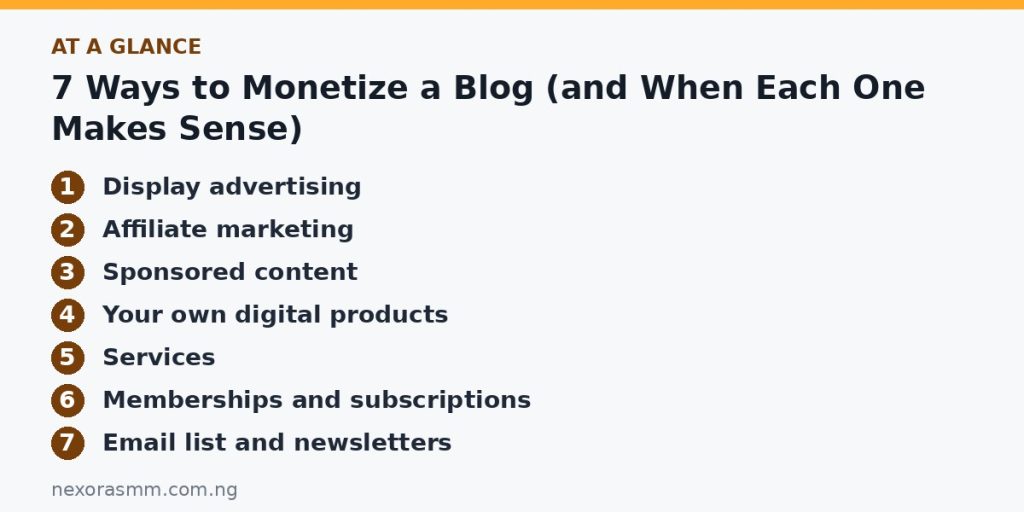
3. Sponsored content
Brands may pay you to write about their product or run a campaign on your site. Sponsorships usually appear after you have an engaged audience. Label sponsored posts clearly, keep your opinions honest and only accept offers relevant to your readers.
4. Your own digital products
Ebooks, templates, courses and printable resources let you sell expertise directly. Profit margins are high because there is no stock to hold, and you control the price. Products work best when they solve a problem your readers already show interest in.
5. Services
A blog is a powerful sales page for your skills. If you write about design, bookkeeping or marketing, readers may hire you for projects, consulting or coaching. For many bloggers, services are the quickest route to meaningful income because a single client can be worth more than thousands of ad views.
6. Memberships and subscriptions
If you produce valuable material regularly, some readers will pay for extras such as in-depth guides, private communities or early access. This model needs loyal readers and a consistent schedule, so it usually comes later.
7. Email list and newsletters
An email list is an asset you own, unlike social followers that can disappear with an algorithm change. You can promote your products, services or sponsors to subscribers directly. Offer a useful free resource to encourage sign-ups, and keep your promises about frequency and privacy.
Choosing the right mix
- Little traffic, strong skill: start with services and your own products.
- Growing traffic, broad topics: add display ads and carefully chosen affiliate links.
- Loyal audience, regular content: add memberships or sponsored content.
Whichever you pick, protect trust. Readers can sense when a page is built to sell rather than to help.
What really drives blog income
Three things matter more than the monetization method: traffic (people who find your articles), trust (readers believe your advice) and relevance (what you offer matches what they need). Improve these and almost any method will work better. Neglect them and none will.
Common mistakes
- Adding advertisements before you have useful content.
- Filling every page with banners that distract from the article.
- Promoting poor products only for commission.
- Expecting results in weeks. Most blogs need months of consistent work.
- Ignoring legal basics such as a privacy policy and affiliate disclosures.
A sensible order for most beginners
Many new bloggers try everything at once and end up with a cluttered site. A calmer sequence works better. First, publish helpful articles on one clear topic and build an email list. Second, offer a simple service or product related to the topic, since this tests whether readers will pay. Third, once traffic is steady, add advertising in tidy positions that do not interrupt the reading flow. Fourth, add affiliate recommendations for tools you genuinely use. Finally, explore sponsorships and memberships when you have a loyal audience.
Measure and adjust
Track which articles bring visitors and which actions lead to income. If a tutorial consistently brings readers who sign up for your list, write more tutorials like it. If a page earns almost nothing from ads but leads to client enquiries, improve it and link to your service. Let real data guide your decisions rather than guesses.
Frequently asked questions
Which method pays the most? It varies. Services and your own products often pay more per reader than ads, but they require more work and trust.
Can I combine several methods? Yes, as long as the combined experience is good for readers and you follow the rules of each program.
How soon can I expect income? There is no standard timeline. Some bloggers earn from services within months; ad income usually takes longer because it depends on traffic.
Do I have to pay tax on blog income? In most places, yes. Keep records and check local rules.
Key takeaways
Build traffic and trust first, then add income streams in a sensible order. Services and products can pay quickly, ads and affiliate links scale with traffic, and an email list protects you from platform changes. Keep the reader’s interest at the centre and your income will follow more steadily.
Educational content only — not financial advice. Income and savings results vary and are never guaranteed. How we write
Enjoyed this story?
Get the best stories delivered weekly.