How to Build an Email List and Turn Readers Into Customers
Social media followers and search traffic can vanish overnight when an algorithm changes. An email list is different: it is a direct line to people who have asked to hear from you. For anyone trying to earn online, it is one of the most reliable assets you can build. This guide shows how to start a list, grow it ethically and turn subscribers into customers without annoying them.
Why an email list matters
When you publish a post, only a fraction of your followers see it. An email arrives in a personal inbox where people choose whether to open it. You own the relationship, not a platform. For bloggers, freelancers and small sellers, a list is often the most dependable way to launch a product, announce an offer or bring readers back to new articles.
Choose a simple tool
Many email services offer a free plan for a small number of subscribers. Choose one that provides a sign-up form, an easy way to unsubscribe and basic automation. Make sure it supports the privacy requirements of your audience’s location, since regulations on consent differ across countries.
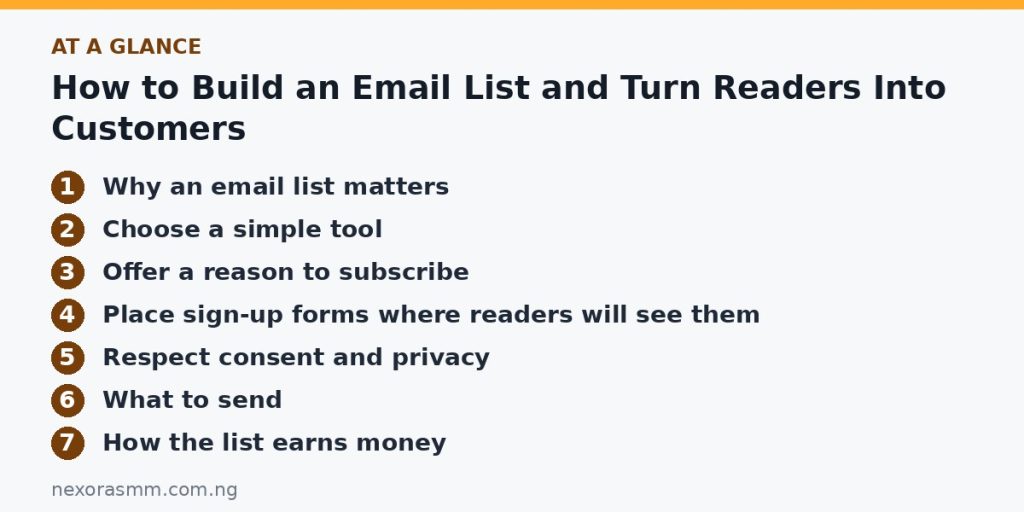
Offer a reason to subscribe
“Subscribe to my newsletter” is a weak invitation. People join when they receive something valuable straight away. This is called a lead magnet. Good examples:
- A one-page checklist that solves a specific problem
- A template or spreadsheet
- A short email course of five lessons
- A free sample chapter or mini guide
Make the promise precise: “Get my 10-point checklist for pricing your first freelance project” beats “Join my mailing list.”
Place sign-up forms where readers will see them
- At the end of your best articles, where readers have just found value
- On your About page
- In a simple dedicated landing page you can share on social media
- In the sidebar or footer, kept unobtrusive
Respect consent and privacy
Only email people who have asked to hear from you. Explain what you will send and how often, include an unsubscribe link in every message and never buy lists of addresses. Mention your email practices in your privacy policy. These habits protect your reputation, keep your messages out of spam folders and are required by law in many places.
What to send
A good rule is to give at least three useful messages for every one that sells. Useful messages might include a lesson, a case study, a short story from your work or a roundup of resources. Keep subject lines clear, avoid exaggeration and write as if to one person. A consistent schedule, whether weekly or twice a month, builds a habit in your readers.
How the list earns money
- Your own products: announce templates, guides or courses to people who already trust you.
- Services: invite subscribers to book a consultation or project.
- Sponsorships: brands pay to reach an engaged audience, once your list is big enough to matter.
- Affiliate recommendations: share tools you truly use, with an honest disclosure.
- Traffic to your articles: each new post can bring subscribers back to your site, supporting any advertising you run.
Measure what matters
Look at open rates, click rates and unsubscribes, but do not obsess over small changes. More important is whether replies and sales are increasing. Ask subscribers what they struggle with and let their answers guide your next topics. A short survey in your welcome email provides valuable direction.
Common mistakes
- Waiting for a big audience before starting. Begin with your first ten subscribers.
- Sending only sales messages.
- Emailing irregularly, so subscribers forget who you are.
- Making unsubscribing difficult.
- Ignoring replies. Every response is a chance to learn.
A simple welcome sequence
The first messages a subscriber receives set expectations. A short sequence of three emails works well. The first delivers the promised resource and introduces you in a few friendly sentences. The second, a day or two later, shares your most useful article or a practical tip. The third asks a question, such as “What is your biggest challenge with this topic?” and invites a reply. The answers give you a rich source of ideas for future content and products, and personal replies help your messages reach the inbox instead of the spam folder.
Keep the list healthy
Every few months, look at subscribers who never open your emails. Send a friendly re-engagement message, and if they still do not respond, remove them. A smaller list of interested readers performs better than a large one full of inactive addresses, and it keeps your sender reputation strong.
Frequently asked questions
How many subscribers do I need to earn? There is no magic number. A small, engaged list that trusts you can generate more income than a large unengaged one.
Is a free tool enough? Usually, in the beginning. Upgrade only when you need features such as automation or larger limits.
How often should I send emails? Choose a frequency you can sustain, such as once a week or every two weeks, and stick to it.
Can I add people from my contact list? Not without their permission. Invite them to subscribe instead.
Key takeaways
Start your list early, offer something genuinely useful, ask for consent and send helpful messages on a regular schedule. Over time, your subscribers become the most dependable audience for your products, services and articles.
Educational content only — not financial advice. Income and savings results vary and are never guaranteed. How we write
Enjoyed this story?
Get the best stories delivered weekly.