Debt Snowball vs Debt Avalanche: Which Should You Use?

Having several debts at once can feel overwhelming: different balances, different due dates and interest quietly growing in the background. Two popular strategies help you decide where to send extra money: the debt snowball and the debt avalanche. This guide explains both in plain language, shows how they differ and helps you choose the one you are most likely to finish.
Before you pick a strategy
First, make a complete list of what you owe. For each debt, write the lender, the balance, the interest rate and the minimum monthly payment. Facing the full picture is uncomfortable but essential. Then make sure you can pay every minimum on time, because missed payments often add fees and damage your credit record.
The debt snowball
With the snowball method, you order debts from the smallest balance to the largest, ignoring interest rates. You pay the minimum on everything, and put every spare amount toward the smallest debt. When it is cleared, you take the money you were paying on it and add it to the next smallest. The payment grows like a rolling snowball.
Strength: quick wins. Clearing a small debt fast gives motivation and fewer accounts to manage.
Weakness: you may pay more interest overall if a larger balance carries a high rate.
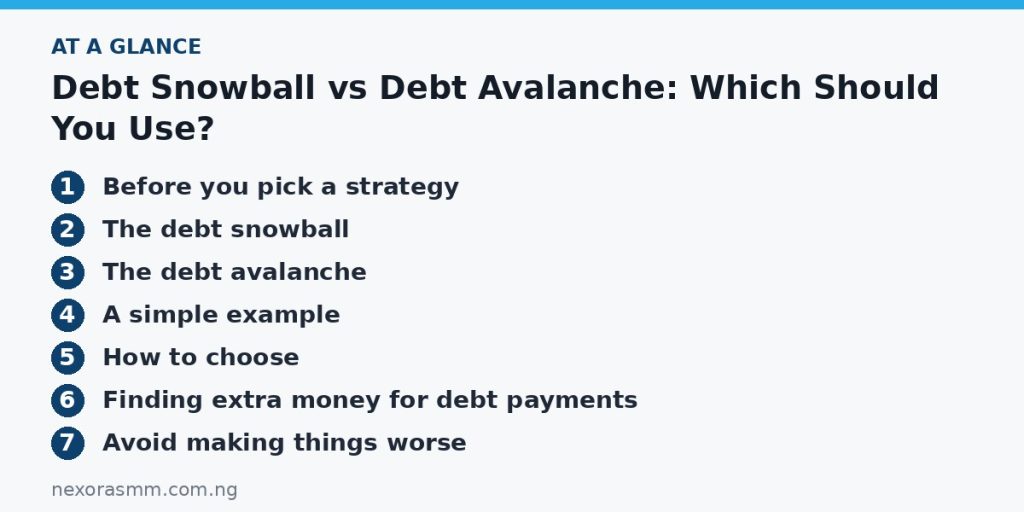
The debt avalanche
With the avalanche method, you order debts from the highest interest rate to the lowest. Again you pay all minimums and put extra money towards the debt with the highest rate. When it is gone, you move to the next highest.
Strength: mathematically cheaper. You usually pay the least total interest and may become debt-free sooner.
Weakness: the first target might be large, so progress can feel slow and discouraging.
A simple example
Suppose you owe three amounts: a small phone loan, a mid-sized personal loan and a large credit balance with the highest rate. The snowball attacks the phone loan first, giving you a quick victory. The avalanche attacks the credit balance first, saving more in interest. Both plans are better than paying only minimums.
How to choose
- Choose snowball if you need motivation, have many small debts or have struggled to stay on track before.
- Choose avalanche if you are disciplined, want to save the most money and have debts with very different rates.
- Mix them. Some people clear one or two tiny debts first, then switch to the highest rate.
The best plan is the one you will actually follow.
Finding extra money for debt payments
- Review subscriptions and spending categories for easy cuts.
- Sell items you no longer need.
- Take on extra work or a small side income for a limited time.
- Use windfalls such as bonuses or refunds for debt rather than spending them.
Avoid making things worse
Do not take new debt to pay old debt unless it is a carefully checked consolidation with lower total cost. Beware of “debt relief” offers that charge upfront fees or ask for access to your accounts. If you are struggling to pay, speak to your lenders early. Many have hardship options, and free debt advice services exist in many countries.
Keep a small safety cushion
Even while paying off debt, keep a small emergency fund. Otherwise a sudden expense may push you back to borrowing. A starter cushion of a small amount is enough until your debts shrink; then you can grow it.
Track your progress
Write your debts on a single page and update it each month. Cross off each debt when it is cleared, and note the total balance remaining. Seeing the number shrink gives you energy to continue, especially during months when progress feels slow. Some people draw a simple thermometer chart and colour it in as the balance falls.
Protect your credit and your peace of mind
Set reminders or automatic payments for every minimum so nothing is missed. Open and read letters from lenders instead of avoiding them. If your situation changes, for example through job loss or illness, contact lenders immediately and ask about options. Debt is stressful, but facing it with a clear plan reduces the anxiety that comes from uncertainty.
Frequently asked questions
Which method is best? Neither wins for everyone. Avalanche costs less in interest; snowball is often easier to stick to.
Should I consolidate my debts? It can help if the new rate and fees are lower than your current costs, but compare the full cost and avoid extending the term so long that you pay more in total.
What if I cannot pay even the minimums? Contact the lenders, explain your situation and ask about reduced or paused payments. Seek free, trustworthy advice rather than paying a company that promises miracles.
How long will it take? That depends on your balances, rates and extra payments. A written plan with dates helps you see the finish line.
Key takeaways
List all debts, pay every minimum and send spare money to one target at a time. Choose snowball for motivation or avalanche for lower interest, and stay consistent. Progress counts more than perfection.
Educational content only — not financial advice. Income and savings results vary and are never guaranteed. How we write
Enjoyed this story?
Get the best stories delivered weekly.