How to Build an Emergency Fund on a Small Income
An emergency fund is money set aside for the unexpected: a medical bill, a broken phone, a sudden repair or a gap between jobs. Without one, a single surprise can force you into borrowing at high cost. The idea of saving feels impossible when your income is small and every month is tight. Yet a modest, steady approach works. This guide shows how to build an emergency fund step by step, even on a limited income.
What counts as an emergency?
An emergency is something urgent, unexpected and necessary. Examples include medical costs, essential home or vehicle repairs, and loss of income. A sale, a holiday or a planned purchase is not an emergency, even if it feels urgent in the moment. Defining this clearly protects the fund from being drained by temptation.
How much do you need?
A common target is three to six months of essential expenses, but that can feel too far away. Break it into stages:
- Starter fund: enough to cover one small emergency, such as a fraction of one month of essentials.
- One month: a full month of essential costs.
- Three months: the standard safety net.
- Six months: extra security if your income is irregular or your job is uncertain.
Work out your essential monthly expenses first: housing, food, transport, utilities, minimum debt payments and basic communication costs.
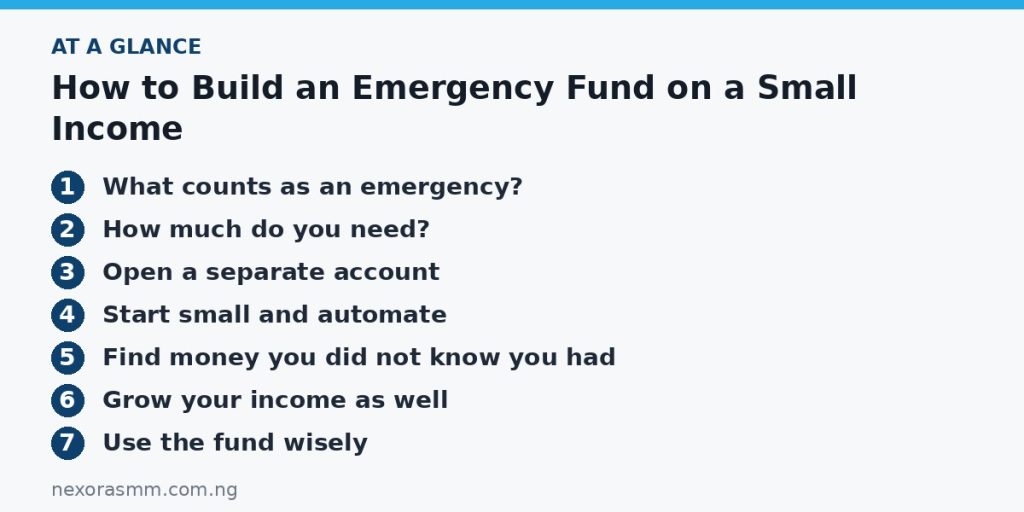
Open a separate account
Keep the fund apart from your day-to-day money. A separate savings account or wallet makes it harder to spend casually and easier to see your progress. Choose a safe, regulated place where you can reach the money quickly. Your emergency fund is not for investing in risky assets; its purpose is to be there when you need it.
Start small and automate
If you can save only a small amount, that is still a good start. Decide on a fixed sum, even one that feels almost too small, and move it the moment you are paid. Automatic transfers remove the need for willpower. Increase the amount when your income grows.
Find money you did not know you had
- Check subscriptions and cancel those you rarely use.
- Compare prices for data, electricity and transport.
- Plan meals to cut food waste.
- Sell unused items.
- Put part of any extra income, bonus or gift straight into the fund.
Grow your income as well
Cutting costs has limits, while income can grow. A part-time service, a skill you can sell or extra work during peak seasons can speed up saving. Decide in advance that a set share of every extra payment goes to the emergency fund.
Use the fund wisely
When an emergency happens, use the money without guilt. That is exactly what it is for. Afterwards, rebuild it with the same method. If you must dip in often, you may need to adjust your budget or build a separate “irregular expenses” fund for predictable costs such as school fees and annual bills.
Handle setbacks
You will probably miss a month at some point. That does not mean failure. Restart the next payday, adjust the amount if necessary and keep going. Consistency over time matters more than a perfect record.
A sample plan for a tight budget
Suppose your essential monthly expenses are 80,000 and you can save only 5,000 a month. Your starter target might be 20,000, which you reach in four months. Your one-month target of 80,000 would take about sixteen months at that pace, so you look for ways to speed up. By cutting 3,000 from subscriptions and shopping and adding 5,000 a month from a small side job, you raise your savings to 13,000 a month and reach the one-month target in about six months. The numbers are only an example, but they show how small changes combine.
Make saving visible
Name your fund something specific, such as “Safety net,” and track the balance on a chart or notebook page. Celebrating each milestone, even with a simple tick, makes the habit more rewarding and helps you keep going.
Frequently asked questions
Should I pay off debt first? Build a small starter fund first so an emergency does not add new debt, then divide extra money between debt payments and growing the fund.
Where should I keep the money? Choose a safe, easily accessible place with low risk. Avoid anything that locks the money away or can lose value suddenly.
Is it better to invest the money? Investing carries risk and is not suitable for money you may need quickly. Build the fund first.
What if my income is irregular? Aim for a larger fund, around six months of essentials, and save a percentage of each payment rather than a fixed amount.
Key takeaways
Define what an emergency is, set a staged target, keep the money separate and save automatically, even in small amounts. Grow your income where you can, use the fund when needed and rebuild afterwards. Small steps repeated over time create real security.
Educational content only — not financial advice. Income and savings results vary and are never guaranteed. How we write
Enjoyed this story?
Get the best stories delivered weekly.