Small Businesses You Can Start With Little Capital

Many people want to start a business but believe they need a large amount of money first. In reality, plenty of small businesses can begin with very little capital, especially those that sell a service or a skill instead of a stock of goods. This guide explains how to choose a low-cost business idea, test it cheaply and grow it without borrowing more than you can repay.
What “little capital” really means
Capital is the money you need before sales begin: tools, stock, transport, a place to work and some marketing. Businesses that sell services need the least, because your time and skill are the main cost. Businesses that sell physical goods need more, because you must buy products before you sell them. Choose the model that fits your budget and your experience.
Low-cost business ideas
Service businesses
- Writing, editing or design services for local businesses.
- Cleaning and laundry services for homes and offices.
- Tutoring or lessons in school subjects, music or languages.
- Event help such as decoration, photography or catering support.
- Repairs for phones, clothes, appliances or bicycles if you have the skill.
Small resale and production
- Buying in small quantities and reselling items people in your area already ask for.
- Home-made food such as snacks, baked goods or ready meals, following local food safety rules.
- Handmade products like soap, candles or accessories, starting with a small batch.
Digital and online
- Social media management for small shops.
- Selling templates or guides you create yourself.
- Virtual assistance for busy professionals.
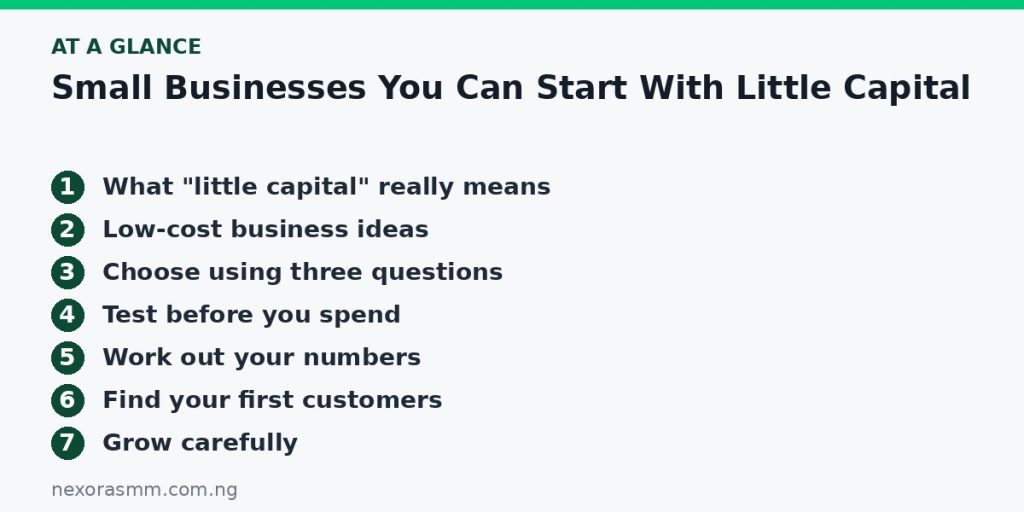
Choose using three questions
- Do people already pay for this? Demand you can see, such as neighbours or businesses asking for it, is a good sign.
- Can I deliver it well now? Choose something you can do competently within weeks, not after years of training.
- Can I start with money I can afford to lose? Avoid borrowing heavily for an untested idea.
Test before you spend
Before buying stock or tools in bulk, test the idea. Offer the service to five people, sell a small first batch or take pre-orders. Note what customers say, what they are willing to pay and what they ask for next. A cheap test teaches more than a long plan written in isolation.
Work out your numbers
List your costs for one unit or one job: materials, transport, data, packaging and your time. Add a margin for your own pay and for slow weeks. Compare the total with what customers will pay. If the numbers do not leave a profit, change the price, reduce costs or choose a different idea. Keep business money separate from personal money so you can see how the business is really doing.
Find your first customers
- Tell friends, family and neighbours exactly what you offer.
- Post clear photos or examples on social media and ask people to share.
- Visit local businesses and offer a small, specific service.
- Ask each happy customer for a recommendation.
Grow carefully
Reinvest early profits into the part of the business that is working: better tools, a larger batch or a modest advert. Avoid expanding faster than your cash flow allows, and keep records of every sale and cost. Check the rules for registering and paying tax where you live, so you are ready when the business grows.
A worked example
Suppose you decide to sell home-made snacks to workers in a nearby office. Your first batch costs 15,000 in ingredients and packaging and produces 60 packs. If each pack sells for 400, your income is 24,000, which leaves 9,000 before counting your time and transport. That is a promising test, but it also shows what to check: how long the batch took, whether customers came back and whether you can reduce the cost per pack by buying a little more at a time. These numbers are only an illustration, but doing this arithmetic before you scale prevents painful surprises.
Protect yourself while starting small
Keep your day job or main income while the business is young if you can. Avoid signing long contracts or paying large deposits before you have regular customers. Keep a simple notebook or spreadsheet with the date, the customer, what you sold and what it cost you. After a month, you will see which products make money and which only keep you busy.
Frequently asked questions
What is the cheapest business to start? A service based on a skill you already have, because you need little more than your time and a way to reach customers.
Should I borrow to start? Preferably not at first. If you must borrow, keep the amount small and have a clear plan to repay it.
Do I need to register immediately? Rules differ. Learn what applies to you and register when required or when you need it to work with larger clients.
How do I avoid losing money? Test small, price properly, track every cost and avoid unproven bulk purchases.
Key takeaways
Start with a service or a small test batch, choose something people already buy and make sure the numbers leave you a profit. Learn from your first customers, reinvest slowly and keep your records clean. A modest, steady start protects you better than a large, risky one.
Educational content only — not financial advice. Income and savings results vary and are never guaranteed. How we write
Enjoyed this story?
Get the best stories delivered weekly.