How to Sell Products on Social Media: A Practical Guide
Social media is where many customers now discover small businesses. You do not need an expensive website to start selling there, but you do need a clear offer, trustworthy presentation and a safe way to take orders. This guide explains how to sell products on social media step by step, from setting up your profile to delivering orders and building repeat customers.
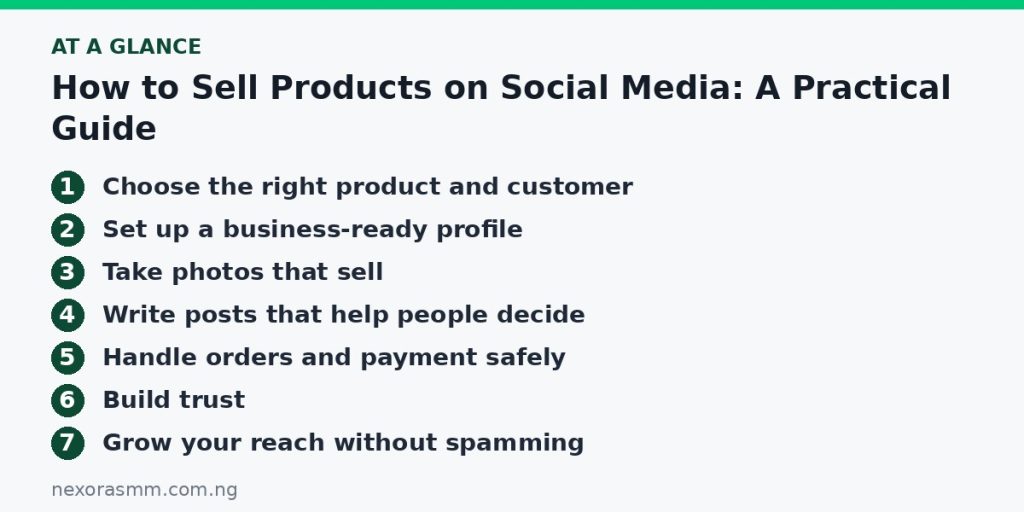
Choose the right product and customer
Begin with a product you can supply reliably, at a price that leaves a profit after costs and delivery. Then decide who it is for. “Everybody” is not a customer. “Working mothers who want quick school-lunch snacks” is. A clear customer makes everything easier: photos, wording, where to post and how to price.
Set up a business-ready profile
- Use a clear name and logo or a clean photo.
- Write a short bio stating what you sell, where you deliver and how to order.
- Add contact details and opening times.
- Choose one or two platforms where your customers already spend time rather than trying to be everywhere.
Take photos that sell
Good natural light and a clean background are enough. Show the product from several angles, show its size next to a familiar object and show it in use. Short videos work well because they let customers see how an item looks and moves. Never use photos that belong to someone else; customers feel cheated when the real product looks different.
Write posts that help people decide
Each post should answer the questions a buyer has: what is it, what does it cost, what sizes or options exist, how long does delivery take and how do I order? Add honest details about materials and limits. Use a simple call to action such as “Send us a message with your size to order.” Post regularly, but quality matters more than volume.
Handle orders and payment safely
- Confirm the product, quantity, price, delivery fee and address in writing.
- Use payment methods that leave a record, such as bank transfers or platform checkout tools.
- Send a receipt or a message confirming the order.
- Share a tracking number or an estimated delivery time.
- Ask customers to confirm when they receive the order.
For new customers, consider partial payment upfront for custom orders and full payment before dispatch for others.
Build trust
Trust is the biggest barrier to buying from a small online seller. You can build it with consistent posting, real customer reviews, clear return rules and prompt replies to messages. Show your workspace or process, and be honest about delays. One unresolved complaint can undo many good sales, so respond politely and fix problems quickly.
Grow your reach without spamming
- Share useful content related to your product, such as tips, how-tos and customer stories.
- Join local community groups where selling is allowed and follow their rules.
- Offer a small bonus for referrals.
- Try a modest paid advert for your best-selling item, and measure the results before spending more.
Know the rules
Each platform has policies about prohibited items, advertising claims and how you may contact buyers. Read them to avoid losing your account. Keep records of sales and expenses, and check the local requirements for registering and paying tax once your sales grow.
A simple weekly routine
Selling on social media works better with a routine than with bursts of effort. Set aside one session each week to photograph new products, one to write and schedule posts and a few minutes each day to reply to messages and comments. On the same day each week, review which posts brought enquiries and which brought none. Repeat the formats that worked: perhaps short videos showing the product in use, or posts where you answer a common customer question. This small system keeps your page active without taking over your life.
Pricing and delivery
Be clear about delivery from the start. State where you deliver, how much it costs and how long it takes. Hidden delivery fees are one of the quickest ways to lose a customer’s trust. Package items carefully so they arrive in good condition, and include a short thank-you note with your contact details so customers know where to reach you if something is wrong.
Frequently asked questions
Do I need a website? Not at the start. A website helps later with credibility and search traffic, but many sellers begin with a profile and a messaging channel.
How do I deal with customers who disappear after asking the price? Make prices visible in your posts and follow up once. Do not chase repeatedly.
What if I have no stock? Take pre-orders honestly, state the waiting time and update customers regularly.
How can I avoid scams? Be careful with overpayment requests, fake payment screenshots and cheques. Confirm that money has reached your account before you send goods.
Key takeaways
Choose a clear product and customer, present them honestly with good photos, take orders and payments through traceable methods and keep your promises. Trust and consistency turn first-time buyers into repeat customers.
Educational content only — not financial advice. Income and savings results vary and are never guaranteed. How we write
Enjoyed this story?
Get the best stories delivered weekly.