10 Common Mistakes New Entrepreneurs Make and How to Avoid Them

Most new businesses do not fail because the owner lacked intelligence. They fail because of avoidable mistakes: spending too early, ignoring the numbers, not talking to customers or doing everything alone. Learning from other people’s errors is cheaper than making them yourself. This guide covers the most common mistakes new entrepreneurs make and how to avoid each one.
1. Starting without testing demand
It is tempting to fall in love with an idea and invest heavily before anyone has agreed to pay. Instead, test early. Offer the product or service to a handful of people, take pre-orders or run a small pilot. If nobody is willing to pay, you have saved money and gained valuable information.
2. Mixing personal and business money
When everything goes through one account, you cannot tell whether the business is profitable. Open a separate account or wallet for business income and costs, and pay yourself a defined amount. This also makes taxes and funding applications much easier later.
3. Ignoring costs and pricing too low
Many beginners price by copying competitors or by guessing, then discover they are working for almost nothing. Calculate the cost of materials, transport, platform fees, your time and a reserve for slow periods, then add a profit margin. If the price you need is too high for the market, change the product, the costs or the customer group.
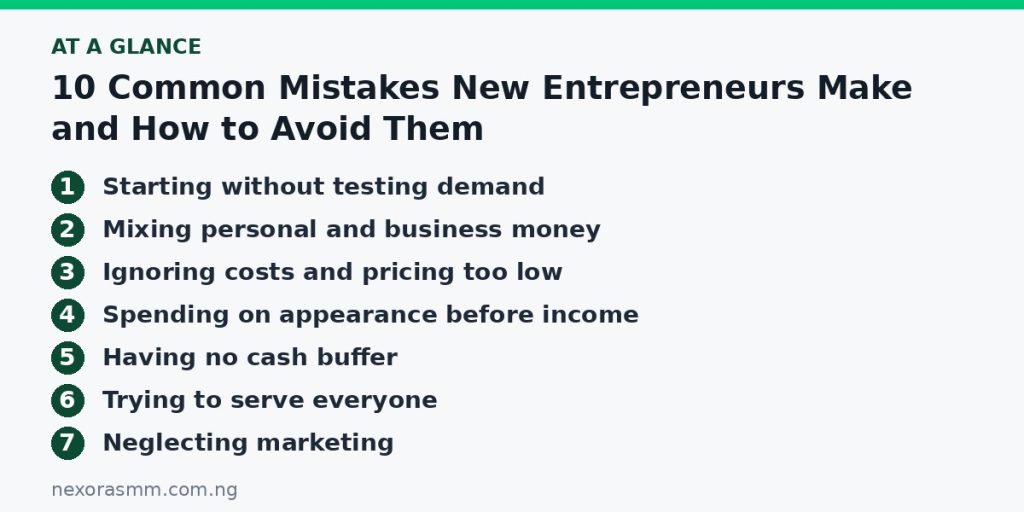
4. Spending on appearance before income
Fancy offices, expensive branding and large stock orders feel like progress but do not create customers. Spend first on what directly produces sales: a good product, a clear message and a reliable way to reach buyers. Upgrade the extras when income supports them.
5. Having no cash buffer
Even profitable businesses fail when cash runs out between paying suppliers and receiving payments. Keep a reserve for at least a few weeks of essential costs, invoice promptly and follow up late payments politely but firmly.
6. Trying to serve everyone
A business that tries to appeal to all customers appeals strongly to none. Choose a specific group and problem, then build your message around it. Specialising makes marketing cheaper and helps you become known for something.
7. Neglecting marketing
A good product does not sell itself. Decide where your customers spend time and show up there consistently. Collect testimonials, ask for referrals and build a simple list of contacts you can message with permission.
8. Doing everything alone for too long
Owners often insist on handling every task. This limits growth and leads to exhaustion. Document repeatable tasks, then hand some to a helper or use simple tools to save time. Focus your own energy on activities only you can do, such as dealing with key customers and planning.
9. Skipping basic records and legal steps
Keep a simple record of sales, expenses and receipts. Learn the rules for registration, licences and tax where you operate, and use written agreements with suppliers and larger clients. A short conversation with a qualified adviser can prevent costly problems.
10. Giving up too early or holding on too long
Some people quit after the first slow month. Others keep spending on an idea the market has clearly rejected. Set review dates, for example every three months, and decide using numbers: customer count, revenue, profit and customer feedback. Improve what works and stop what does not.
A simple habit that prevents many mistakes
Once a week, spend thirty minutes reviewing your sales, costs, cash balance and customer messages. Write down one thing to improve before next week. This habit keeps you connected to reality and helps you notice problems while they are still small.
Questions to ask before you spend money
Before any significant purchase for the business, pause and ask four things. Will this directly help me win or serve customers? Could I test the idea more cheaply first? What happens to my cash if sales are slower than expected? Can I afford to lose this money? If you cannot answer at least the first and last questions confidently, wait. Delaying a purchase by a week costs little and often saves a great deal.
Build a small circle of support
Talk regularly with other people who run small businesses, join local business groups and find a mentor who is a few steps ahead of you. Ask what they wish they had known earlier. Their experience can save you months of trial and error, and the encouragement helps on difficult days.
Frequently asked questions
How much money do I need to start? It depends on the business. Begin with the smallest version that lets you serve real customers, then grow with the income.
Should I quit my job to start? Many people start part-time first, which reduces risk. Consider leaving only when the business earns consistently and you have savings.
What if I make a mistake? It is normal. Fix it, record the lesson and avoid repeating it.
Do I need a business plan? A simple one-page plan covering customers, offer, price, costs and marketing is enough to begin.
Key takeaways
Test demand, separate your finances, price with a margin, keep a cash buffer, focus on one customer group and market consistently. Review your numbers weekly and ask for advice when needed. Avoiding these common mistakes gives your business far better odds.
Educational content only — not financial advice. Income and savings results vary and are never guaranteed. How we write
Enjoyed this story?
Get the best stories delivered weekly.