AI Prompts for Historical African Films
Artificial intelligence is opening new possibilities for filmmakers who want to tell historical stories, recreate ancient kingdoms and bring traditional cultures to the screen. With AI image and video generation tools, independent creators can visualize royal palaces, traditional marketplaces, warriors, village life and important cultural events before beginning a full production.
For filmmakers interested in Yoruba history and African storytelling, these tools can help transform written descriptions into cinematic visual references. They can also make it easier to experiment with costumes, architecture, landscapes and camera movements without immediately building physical sets.
However, creating a convincing historical film requires more than generating beautiful images. The filmmaker must understand the historical period, research the culture and ensure that the visual details support the story.
1. Why AI Is Useful for Historical Filmmaking
Historical films often require environments and objects that no longer exist in their original form. A story set in an ancient Yoruba kingdom, for example, may require a reconstruction of a royal compound, a traditional marketplace, a warrior gathering or a palace courtyard.
AI image generators can help filmmakers visualize these environments using detailed written prompts. Directors can explore different architectural designs, lighting conditions, costumes and compositions before deciding how a scene should appear.
AI-generated references may also help writers and production designers communicate their ideas. Instead of describing an entire village using words alone, a director can create a visual reference showing the buildings, pathways, clothing and surrounding landscape.
For independent filmmakers working with limited resources, this can make early planning more flexible. It does not eliminate the need for historical research, but it provides another way to develop and communicate a creative vision.
2. Creating a Historical Yoruba Kingdom With AI

The first step is to define the historical setting. A film about a specific Yoruba kingdom should not automatically combine architectural styles, clothing and customs from different centuries.
Consider the political setting, the environment, the social structure and the type of buildings appropriate to the story. If the exact historical appearance is uncertain, describe the scene as historically inspired rather than presenting every generated detail as an established fact.
Example image prompt
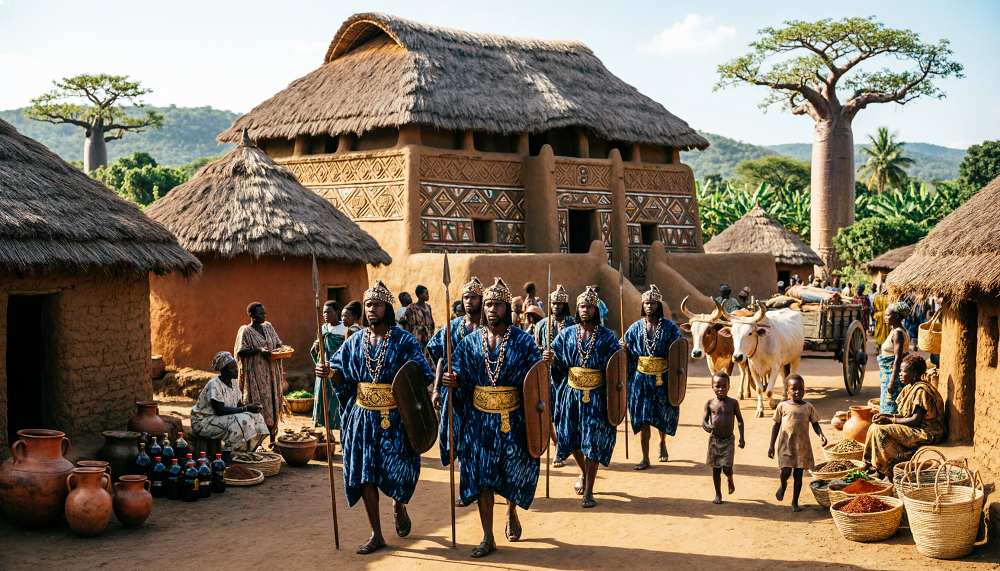
A historically inspired Yoruba kingdom in West Africa, a royal palace surrounded by traditional earthen buildings and courtyards, Yoruba warriors wearing period-appropriate traditional clothing, villagers moving through a busy marketplace, traders displaying locally made crafts and woven fabrics, tropical vegetation, detailed traditional architecture, realistic African characters, cinematic historical drama, warm natural sunlight, authentic material textures, wide establishing shot, epic film composition.
This prompt gives the image generator several visual elements to interpret, including the palace, the villagers, the warriors and the surrounding environment.
The result can serve as a starting point for further development. Filmmakers should compare the generated details with historical and cultural references before using them in a production intended to portray a specific period accurately.
3. Turning the Historical Image Into a Video Scene
After developing the environment, the next step is to introduce movement. A video prompt should describe what the characters do, how the camera moves and how the scene changes from beginning to end.
Example video prompt
A group of Yoruba warriors slowly walks through a historic West African village toward the royal palace. The warriors carry historically appropriate equipment and wear carefully researched traditional clothing. Villagers pause their activities and respectfully move aside as the group passes. The camera tracks alongside the warriors, showing their expressions and clothing, before gradually revealing the palace in the distance. Natural walking movements, realistic character interactions, tropical daylight, detailed traditional architecture, cinematic historical African drama, consistent costumes and environment.
This prompt establishes a clear sequence: the warriors enter the village, pass the villagers and approach the palace.
For better results, consider generating the sequence as separate clips. One clip can establish the village, another can show the warriors walking, and a third can reveal the palace. Editing the clips together gives the filmmaker greater control over pacing and continuity.
4. Maintaining Historical Accuracy in Costumes and Architecture
One challenge with AI-generated historical scenes is that the technology may combine visual details from different periods or cultures.
A warrior’s clothing might include modern fabrics or accessories. A palace may resemble architecture from another region, while a village scene may contain objects that would not belong in the intended historical setting.
To reduce these problems, research the specific period before writing the prompts. Use reliable historical books, museum collections, scholarly publications and documented cultural references to guide the design.
Pay particular attention to clothing, hairstyles, weapons, building materials, household objects and the organization of settlements.
Avoid modern cars, smartphones, electrical streetlights, contemporary furniture and modern buildings unless the story deliberately includes them.
It is also important to distinguish historical evidence from artistic interpretation. If reliable sources do not establish precisely how a particular building or costume looked, the film should not automatically treat an AI-generated version as historically proven.
5. Keeping Characters Consistent Across Scenes
Historical dramas often contain recurring characters such as kings, queens, warriors, chiefs, messengers and palace attendants.
Create a character reference for each important person before generating multiple scenes. Include their approximate age, facial features, hairstyle, clothing, accessories and other identifying characteristics.
For example, a royal character might wear a particular style of traditional clothing and distinctive beads throughout the film. Reusing the same description helps maintain a recognizable appearance.
Where supported, use reference images or character-consistency features in your AI video tool. Review each generated clip to ensure that the character’s appearance remains stable.
Costume changes should follow the story. A character attending a royal ceremony may dress differently from the same character travelling through a village, but those changes should be deliberate.
6. Using Camera Movement to Make Historical Scenes Cinematic
Camera movement can make a historical environment feel more expansive and immersive.
A wide establishing shot can introduce the kingdom. A tracking shot can follow warriors through the marketplace. A slow dolly forward can reveal a king seated inside the palace, while an over-the-shoulder shot can show two chiefs discussing a serious matter.
These movements should serve the narrative rather than simply decorate the scene.
For example, a slow camera movement toward a royal throne may suggest authority and anticipation. A wider shot of a marketplace can communicate the scale of daily life and show how people interact within the community.
Keep movements relatively simple when generating short AI clips, and inspect the results for unnatural walking, inconsistent objects or changes in the architecture.
7. Bringing Historical African Stories to a Wider Audience
AI-assisted filmmaking can help independent creators explore stories about Yoruba kingdoms, family traditions, historical conflicts, cultural celebrations and the lives of important historical figures.
However, the technology is only one part of the production process. Strong storytelling, careful research, believable characters, appropriate sound design and thoughtful editing remain essential.
Creators should also consider how cultural practices are represented, especially when portraying real communities, historical events or sacred traditions.
Conclusion
AI can help filmmakers visualize historical Yoruba kingdoms and develop cinematic period dramas by creating references for architecture, costumes, characters and environments. The best results come from combining detailed prompts with reliable research, consistent character designs and deliberate camera movements.
Start by identifying the historical period, researching its visual details and developing the main characters. Then generate individual scenes, review them for accuracy and assemble the strongest results through editing.
Used thoughtfully, AI can become a valuable creative tool for exploring African history and bringing culturally grounded stories to modern audiences.
Educational content only — not financial advice. Income and savings results vary and are never guaranteed. How we write
Enjoyed this story?
Get the best stories delivered weekly.