October 3, 2026 · OLUWATOBI JOHN · 5 min read · Updated October 10, 2026
Romantic scenes are an important part of many films, from Nigerian romantic dramas to international love stories. A memorable romantic moment does not depend only on two characters standing together. It comes from their expressions, body language, surroundings, lighting and the emotions they communicate without necessarily speaking.
Artificial intelligence is making it easier for independent filmmakers to visualize romantic scenes before production. With carefully written prompts, creators can generate images and video clips featuring couples sharing intimate conversations, walking beside the ocean, meeting after a long separation or experiencing the excitement of falling in love.
The secret is to describe not only what the characters are doing, but also what they are feeling and how the audience should experience the moment.
1. Describe the Characters and Their Emotions
Before creating a romantic scene, establish the appearance of both characters. Include their approximate ages, facial features, hairstyles, clothing and other identifying details.
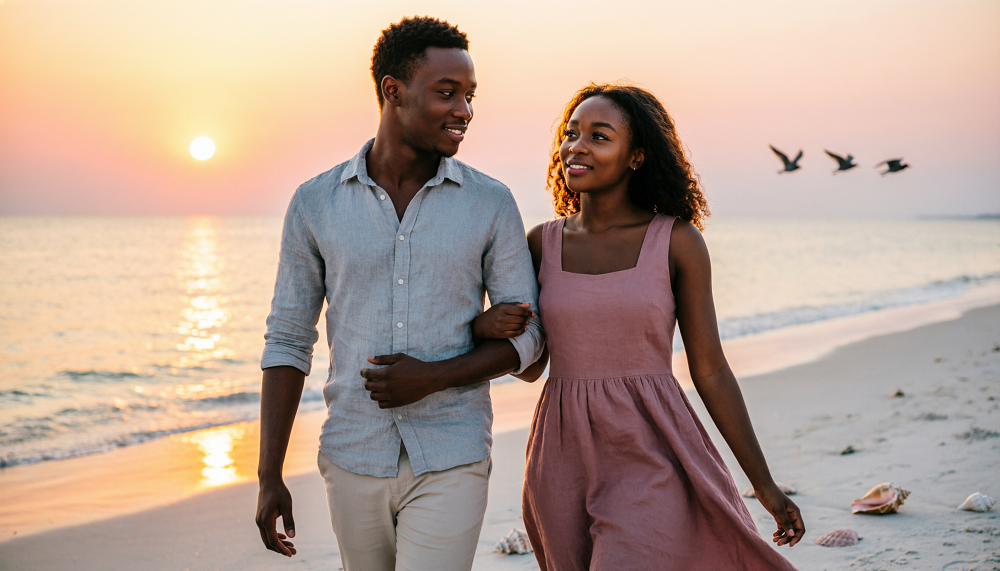
For example, a Nigerian romantic drama might feature a young couple meeting on a beach after several months apart. Their expressions should communicate affection, excitement and a little nervousness.
Instead of writing only “a couple in love,” describe how they look at each other, how they smile and how their body language changes as they become more comfortable.
A detailed prompt gives the AI a clearer visual direction and helps the resulting scene communicate a specific emotion.
2. Example: Creating a Romantic Beach Image
A beach at sunset can provide a beautiful setting for a romantic scene because the warm light, ocean waves and open landscape help establish a peaceful atmosphere.
Example image prompt
A young Nigerian couple sitting together beside a quiet beach during sunset, holding hands and looking into each other’s eyes, gentle smiles, natural affectionate expressions, the woman wearing an elegant flowing dress and the man wearing a smart casual outfit, waves moving gently behind them, warm orange sunlight reflecting on the ocean, soft cinematic lighting, romantic atmosphere, realistic African characters, natural skin texture, shallow depth of field, detailed environment, cinematic movie photography, widescreen composition.
This prompt combines character details, physical interaction, location, lighting and mood. Each element contributes to the intended visual result.
You can adapt the same structure to other settings, such as a quiet garden, a rooftop restaurant, a candlelit room or a scenic countryside location.
3. Turn the Romantic Image Into an AI Video Scene
An image captures one moment, while a video scene needs movement and progression. Describe how the characters move, how their expressions change and how the camera captures their interaction.
Example video prompt
A young Nigerian couple walks slowly along a quiet beach at sunset while holding hands. Gentle ocean waves roll toward the shore as the woman turns to look at the man. They stop walking and look into each other’s eyes before exchanging warm, natural smiles. The camera slowly circles around them, capturing their expressions against the glowing sunset and ocean. Their movements are relaxed and believable, with subtle gestures and natural body language. Warm sunset lighting, realistic African characters, cinematic romantic drama, shallow depth of field, smooth camera movement and emotional atmosphere.
The scene progresses naturally from walking to stopping and sharing a meaningful look. This gives the AI video generator a clearer sequence of actions.
For improved results, avoid including too many complex movements in one short clip. Generate additional shots for close-ups, wider views and other important moments, then assemble them during editing.
4. Use Lighting to Establish a Romantic Mood
Lighting has a powerful influence on the emotional tone of a romantic scene.
Warm sunset lighting can create a feeling of tenderness and nostalgia. Soft daylight may suit a lighthearted romantic comedy, while candlelight can create an intimate atmosphere for a quiet conversation.
Moonlight and city lights may be more suitable for a couple sharing a serious conversation at night.
When writing your prompt, describe the lighting specifically rather than simply asking for “beautiful lighting.” For example, use phrases such as “warm golden-hour sunlight illuminating their faces” or “soft candlelight creating gentle shadows across the room.”
These instructions help establish the intended atmosphere, although the exact result will depend on the AI tool.
5. Use Camera Movements to Capture Emotion
Camera techniques can help make romantic scenes more engaging.
A slow dolly forward can draw attention to a character’s expression. A close-up can capture a nervous smile or a moment of realization. A tracking shot can follow a couple walking together, while a slow circular movement can reveal their expressions from different angles.
Over-the-shoulder shots are useful for romantic conversations because they show one character’s perspective while keeping the other person’s expression visible.
Choose movements that support the emotional purpose of the scene. A quiet conversation may benefit from gentle camera movement, while a dramatic reunion might use alternating close-ups to capture the characters’ reactions.
6. Maintain Character Consistency Across Romantic Scenes
If the couple appears throughout a movie, their appearance should remain consistent.
Create a separate character description for each person, including their facial features, skin tone, hairstyle, clothing and accessories. Reuse these details in every relevant prompt.
Where your AI tool supports reference images or character-consistency features, use them to guide new generations.
Pay attention to clothing continuity as well. If the couple is walking along the beach in the evening, their outfits should remain the same across shots that belong to that sequence.
Review each generated clip before including it in the final edit. Changes in facial features, hand positions or body proportions can interrupt the emotional connection between shots.
7. Add Sound and Editing for a Professional Finish
Visuals are only one part of a convincing romantic scene. Gentle instrumental music, the sound of waves, quiet footsteps and natural dialogue can help create a more immersive experience.
Avoid allowing background music to overpower conversations. Use pauses and silence when appropriate, particularly during moments when the characters communicate through expressions rather than words.
During editing, arrange the clips so the emotional progression feels natural. A wide shot can establish the location, a medium shot can show the couple’s interaction, and close-ups can capture the most important expressions.
Conclusion
Creating romantic scenes with AI requires more than describing two people together. Successful prompts communicate character appearance, emotional expressions, body language, environment, lighting and camera movement.
Start with a clear visual concept, describe the characters carefully, and build each scene around a specific emotional moment. Use consistent character references, generate manageable video clips and combine the strongest results through thoughtful editing.
With practice, this approach can help independent filmmakers create more expressive romantic scenes for short films, music videos, trailers and full-length dramas.