AI Prompts for Nollywood-Style Movie
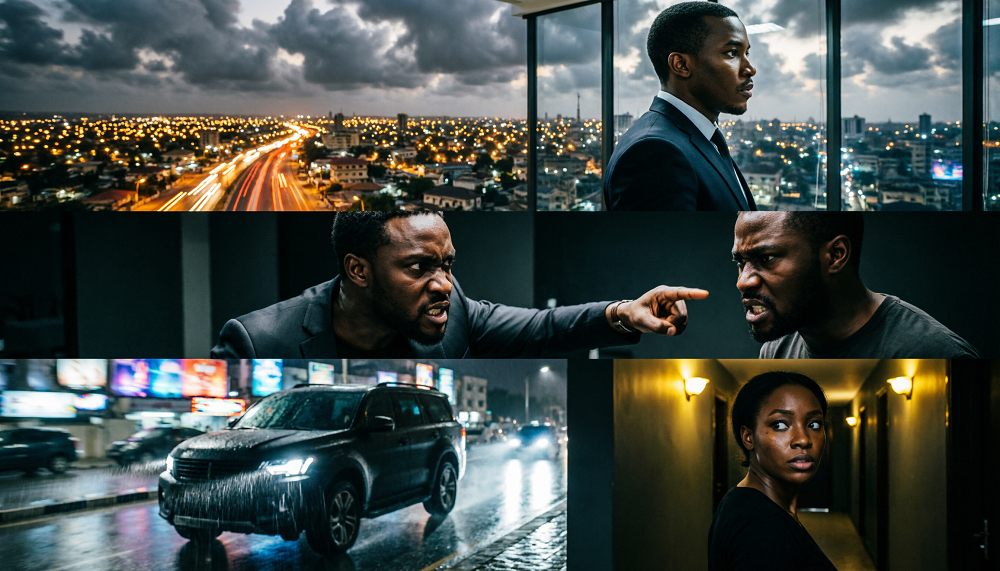
Artificial intelligence is making it easier for filmmakers to visualize powerful African movie scenes before production begins. Whether you are planning a Nollywood family drama, a romantic reunion, a historical Yoruba film, or an emotional story about betrayal and forgiveness, AI image and video generators can help turn your screenplay into cinematic visuals.
Instead of relying only on written descriptions, filmmakers can create visual references showing how characters look, how locations appear, and how important moments might unfold on screen.
However, creating a convincing dramatic scene requires more than placing characters in front of a camera. Their expressions, body language, surroundings, lighting, and interactions must work together to communicate the emotion of the story.
In this guide, you will learn how to write effective prompts for realistic African movie scenes using a dramatic family reunion as an example.
1. Start With the Story Behind the Scene
Before writing an AI prompt, determine what the scene is supposed to communicate.
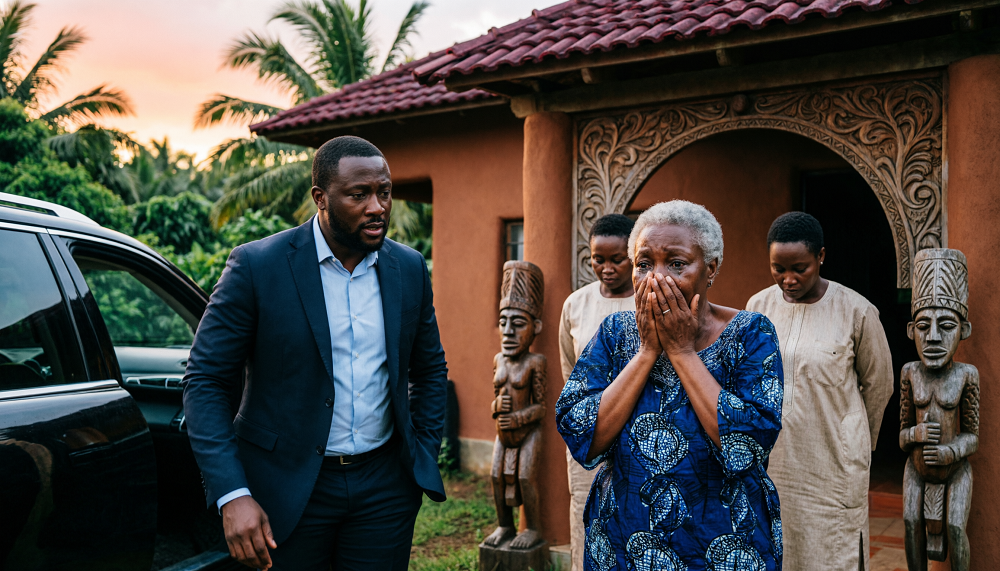
Consider a wealthy Nigerian businessman who returns to his family compound after many years away. His elderly mother sees him standing at the entrance and becomes overwhelmed with emotion. Other family members watch silently, unsure whether to approach him.
This is more than a scene of a man arriving home. It could communicate regret, forgiveness, family separation, sacrifice, or the healing of an old wound.
Understanding the emotional purpose helps you decide what the characters should do and how the camera should capture their reactions.
Ask yourself three questions:
- What happened before this moment?
- What emotion should the audience feel?
- What should the audience learn from the characters’ reactions?
The answers will help you create a scene that contributes to the larger story.
2. Build Realistic African Characters
For a believable African movie scene, describe the characters with enough detail to distinguish them from one another.
Your prompt can include their approximate ages, skin tones, facial features, hairstyles, clothing, and emotional expressions.
For example, the businessman might wear a well-tailored suit, while his elderly mother wears a traditional Yoruba iro and buba with a matching head tie. Two relatives could stand behind her in everyday Nigerian clothing.
These details help establish the characters’ social backgrounds and relationships.
If a character appears in multiple scenes, create a reference image first. Reuse the same reference and written description whenever possible. This can help the AI maintain the character’s facial identity, hairstyle, and other defining features.
3. Use a Detailed Image Prompt
A strong image prompt should describe the character, action, location, time, lighting, mood, and visual style.
Here is an example you can adapt for a Nigerian family drama.
Example AI image prompt
” A wealthy Nigerian businessman in his early forties arrives at his family compound after many years away. He wears an elegant dark suit and stands beside a black SUV near the entrance. His elderly Nigerian mother, dressed in a traditional Yoruba iro and buba with a matching head tie, stands at the doorway with tears in her eyes, looking at him in disbelief. Two adult family members watch silently from behind her. A large traditional Nigerian family house stands in the background, surrounded by tropical vegetation and a spacious courtyard. Warm evening sunlight falls across the compound, creating soft shadows and natural skin tones. The mother and son are the emotional focus of the composition. Realistic African characters, authentic clothing, expressive faces, natural body proportions, cinematic framing, photorealistic photography, dramatic Nollywood family movie atmosphere.”
This prompt provides a clear visual direction without requiring the AI to invent every detail independently.
If the result looks too modern or does not reflect the intended cultural setting, refine the architecture, clothing, and environment in a second generation.
4. Turn the Image Into a Moving Video Scene
An image can establish the composition, but a video needs movement that feels natural and emotionally convincing.
Describe what happens first, what happens next, and how the camera follows the action. Avoid asking the AI to perform too many complex actions simultaneously.
Example AI video prompt
“A wealthy Nigerian businessman steps out of a black SUV and slowly walks toward his mother’s house. His elderly mother appears at the entrance and suddenly recognizes him. Her expression changes from surprise to overwhelming emotion. She walks toward him with tears in her eyes, and he opens his arms to embrace her. They hold each other for several seconds. Two family members remain near the doorway, watching quietly. The camera follows the man’s approach with a slow cinematic tracking movement, then gently moves closer as mother and son embrace. Warm evening sunlight, realistic walking and embracing movements, natural facial expressions, authentic Nigerian family compound, consistent character appearances, emotional Nollywood drama, photorealistic cinematic style.”
For better control, generate the arrival, the mother’s reaction, and the embrace as separate shots. This allows you to correct mistakes without regenerating the entire sequence.
5. Use Camera Angles to Strengthen the Emotion
Camera choices can make a dramatic scene more powerful.

Wide establishing shot
Introduces the family compound, the vehicle, and the characters’ positions. It helps viewers understand the environment before the emotional moment begins.
Close-up reaction shot
Captures the mother’s disbelief, tears, and changing expression as she recognizes her son.

Medium shot of the embrace
Shows the characters’ body language and makes the reunion feel intimate without losing the surrounding setting.
These are visual references for planning your composition. Your generated shots should use consistent characters, clothing, and location details.
6. Pay Attention to Lighting and Atmosphere
Lighting helps establish the emotional tone of a scene.
Warm evening sunlight can make a family reunion feel welcoming and nostalgic. Soft shadows can add depth to the characters’ faces, while a slightly subdued background keeps attention on the emotional interaction.
For a sad or tense scene, you might use overcast daylight, muted colors, or darker interiors. For a joyful reunion, warmer light and a more open composition may be appropriate.
Do not rely on the word “cinematic” alone. Explain what the lighting should do and which part of the scene should attract the viewer’s attention.
7. Maintain Continuity Across Scenes
One of the biggest challenges in AI filmmaking is keeping the same characters and environment consistent.
If the businessman wears a dark suit in the arrival scene, he should not suddenly appear in a different outfit during the embrace unless the story explains the change.
Likewise, the mother’s head tie, the SUV’s appearance, and the house’s layout should remain consistent across connected shots.
A practical workflow is to:
- Generate character reference images.
- Create an approved reference for the family compound.
- Write a separate prompt for each shot.
- Reuse the relevant references in every generation.
- Review the clips together before editing.
Remember that detailed prompts and reference images improve consistency but cannot guarantee perfect results with every AI tool.
8. Edit the Scene Into a Complete Dramatic Sequence
After generating the shots, assemble them in a video editor. Begin with the businessman arriving, cut to his mother’s reaction, and then show the embrace.
Add gentle background music, environmental sounds, or dialogue if the story needs them. For example, the mother might whisper his name before walking toward him, making the reunion feel more personal.
Keep the editing focused on the emotional journey. Too many transitions, sound effects, or camera changes can distract from the characters.
Conclusion
AI can help filmmakers visualize dramatic African movie scenes before investing in a full production. The key is to combine authentic character descriptions, culturally appropriate locations, purposeful lighting, emotional actions, and clear camera instructions.
For the best results, plan each shot separately, reuse character references, and build the scene around the emotion you want the audience to feel.
With this approach, you can develop more coherent Nollywood dramas, family stories, historical films, and short movies from your written ideas.
Educational content only — not financial advice. Income and savings results vary and are never guaranteed. How we write
Enjoyed this story?
Get the best stories delivered weekly.