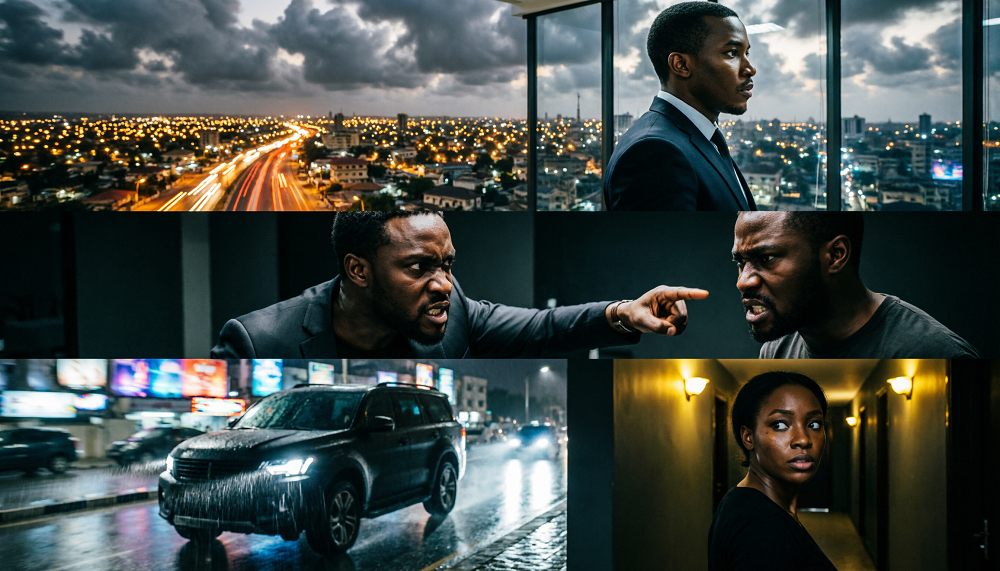
How AI Is Changing Film and Music Production

1. How Artificial Intelligence Is Changing Independent Film Production
Artificial intelligence is becoming an increasingly useful tool in the entertainment industry. From developing story ideas to creating visual references, AI is helping independent filmmakers explore creative possibilities without always needing expensive production equipment.
Before filming begins, directors often need to imagine how scenes will look, how characters will appear and how different locations will fit the story. AI tools can help turn written descriptions into concept images, allowing filmmakers to experiment with different creative directions before committing to a production plan.
Another advantage is the ability to explore multiple visual styles. A filmmaker developing a drama, comedy, music video or fantasy story can use AI-generated references to communicate ideas to actors, cinematographers, designers and editors.
However, AI-generated content still requires human judgment. A compelling film depends on storytelling, acting, emotion, sound, pacing and the director’s creative vision. AI can support these elements, but it does not automatically produce a meaningful story.
For independent filmmakers working with limited budgets, AI can serve as an additional creative resource. When used carefully, it can help make the planning process more flexible and allow creators to test ideas before spending money on production.
The future of independent filmmaking may involve a closer relationship between traditional production skills and AI-assisted creative tools.
2. How AI Image Generators Help Filmmakers Visualize Scenes
Visual planning is an important part of filmmaking. Directors frequently use sketches, photographs, storyboards and reference images to explain what they want a scene to look like.
AI image generators provide another way to develop these visual references. By entering a detailed description, a filmmaker can experiment with lighting, costumes, backgrounds, camera angles and atmosphere.
For example, a director planning a suspenseful night scene might generate references showing a quiet street, dramatic shadows and a character standing beneath a streetlight. These images can help the production team understand the intended mood before filming starts.
AI-generated images can also support costume and production design. A filmmaker can explore several wardrobe concepts or room layouts before choosing a final direction.
The quality of the results depends partly on how clearly the creator describes the scene. Specific details about the setting, time of day, character appearance and visual style can help produce more useful references.
There are limitations, however. AI images may contain inconsistent details, unusual hands, inaccurate objects or visual elements that cannot easily be recreated on a real set. They should therefore be reviewed carefully.
AI image generation is most useful when it supports planning and communication rather than replacing the filmmaker’s artistic judgment.
3. Using AI to Develop Better Film Story Ideas
Developing an original story can be challenging, particularly for independent writers who work without a large writing team.
Artificial intelligence can help writers explore possible story directions, character conflicts, settings and alternative endings. It can also help organize scattered ideas into a clearer narrative structure.
A writer might begin with a simple concept, such as a family dealing with a long-hidden secret. AI can help brainstorm different ways that secret could affect the characters, create tension between family members or influence the ending.
Writers can also use AI to examine pacing. If a story feels slow, they can ask for possible ways to introduce conflict earlier or strengthen the connection between scenes.
Nevertheless, generating ideas is not the same as creating a successful screenplay. Strong stories often depend on authentic emotions, believable dialogue, cultural understanding and distinctive characters.
Writers should review AI-generated suggestions and make sure the finished work reflects their own voice. They should also verify historical details and other factual information when accuracy matters.
The most productive approach is to treat AI as a brainstorming partner. The writer remains responsible for choosing the ideas, shaping the characters and deciding what the story ultimately means.
4. Can Artificial Intelligence Reduce the Cost of Music Video Production?
Music video production can involve several expenses, including location hire, cameras, lighting, performers, costumes, transportation and editing.
AI tools are creating additional options for artists who want to develop visual content on a limited budget. Depending on the tools used, musicians can experiment with concept artwork, animated sequences, backgrounds and AI-assisted video generation.
An independent artist could begin by developing a visual concept based on the mood and lyrics of a song. They might create references for the opening scene, chorus, instrumental section and final sequence before deciding which elements should be filmed or generated digitally.
AI can also help artists explore different visual approaches. A gospel musician might prefer warm lighting and uplifting imagery, while an alternative musician might experiment with surreal environments or abstract animation.
However, AI-generated video is not always consistent. Characters may change appearance between shots, movements can look unnatural, and some tools struggle to maintain continuity across a longer sequence.
Artists should also consider licensing terms, distribution requirements and the rights associated with any images, voices or music used in production.
AI can make certain creative tasks more accessible, but a professional-looking music video still requires planning, editing and careful artistic direction.
5. The Role of AI in Film Pre-Production
Pre-production is the planning stage that takes place before filming. It may include script development, casting, location scouting, budgeting, scheduling, costume planning and storyboarding.
Artificial intelligence can support several of these activities by helping filmmakers organize information and explore options.
For instance, a director can use AI to break a screenplay into individual scenes and identify recurring locations, important props and costume requirements. This can help the production team prepare for filming more efficiently.
AI tools can also assist with preliminary storyboards and visual references. These materials give crew members a clearer understanding of how the director imagines each scene.
Writers may use AI to summarize character backgrounds or identify parts of a screenplay that need further development. Production coordinators may also find it useful for drafting checklists and organizing schedules.
Despite these benefits, human review remains essential. AI may overlook practical production constraints, misunderstand a scene or suggest an unrealistic schedule.
Budgets and schedules should always be checked against real costs, staff availability and location requirements.
When combined with experience and careful preparation, AI-assisted planning can help independent productions use their resources more effectively.
6. How AI Video Generation Is Creating New Opportunities for Digital Creators
AI video generation allows users to create short moving images from written prompts or visual references. This technology is attracting attention from filmmakers, musicians, advertisers and online content creators.
A creator might describe a futuristic city at sunset, a dramatic landscape or an imaginary environment and use an AI video tool to produce a short visual sequence.
These capabilities can be useful when a production requires a location that is difficult to access or an environment that would be expensive to construct physically.
AI video may also help creators produce experimental films, promotional clips, visualizers for music and short-form social media content.
However, generating a coherent video remains more complicated than generating a single image. Characters, clothing, lighting and objects may change unexpectedly between shots. Camera movements and physical interactions may also appear unnatural.
Creators can improve their results by planning short scenes, maintaining consistent character references and reviewing every generated clip before editing.
It is also important to check the terms of the selected platform, especially when the finished work will be monetized.
AI video generation is not a complete replacement for conventional filmmaking. Instead, it offers another production method that creators can combine with live-action footage, animation and traditional editing.
7. Why Human Creativity Still Matters in AI-Assisted Entertainment
As artificial intelligence becomes more capable of generating images, scripts and videos, questions about human creativity are becoming increasingly important.
AI systems can produce many variations of a concept, but a large selection of outputs does not automatically result in a compelling film, song or television programme.
Human creators bring personal experiences, cultural knowledge, emotional understanding and individual perspectives to their work. These qualities influence how stories are told and how audiences connect with characters.
A director may use AI to explore different versions of a scene but still need to decide which version communicates the intended emotion. A screenwriter may receive suggestions for dialogue but must determine whether the words sound natural for the characters.
The same principle applies to music videos and visual storytelling. Technology can generate images, but the artist must decide how those images relate to the music and what message they communicate.
Ethical considerations also matter. Creators should consider permission, attribution, privacy and the appropriate use of recognizable people or copyrighted material.
AI can support the creative process, but meaningful entertainment still depends on thoughtful choices, original perspectives and responsible production practices.
8. How Independent Creators Can Build an AI-Assisted Production Workflow
Independent creators do not need to use every available AI tool. A practical workflow begins by identifying the production tasks that consume the most time or money.
The first step is to develop a clear concept. A filmmaker or musician should establish the story, audience, mood and intended final format before experimenting with AI.
Next, the creator can use writing tools to organize the concept into scenes or production stages. Image-generation tools may then help establish character designs, locations, lighting and visual style.
After the visual direction is approved, creators can test suitable video-generation tools or combine AI-generated material with footage captured using a camera or smartphone.
Editing is the next important stage. The creator must arrange the scenes, improve transitions, synchronize music and dialogue, and remove weak or inconsistent material.
Sound quality should not be neglected. Poor dialogue, distracting background noise or badly balanced music can reduce the impact of an otherwise attractive video.
Finally, the finished project should be checked for visual errors, factual problems, rights issues and platform requirements.
A well-planned workflow can help creators avoid unnecessary experimentation and focus on the parts of production where AI provides genuine value.
9. AI and the Future of Visual Storytelling
Visual storytelling has evolved alongside changes in cameras, editing software, computer graphics and digital distribution. Artificial intelligence represents another development in this continuing process.
AI-assisted tools are expanding the range of visual experiments available to creators. Independent filmmakers can explore imaginary environments, develop alternative character designs and test different visual styles without constructing every element physically.
These capabilities may be particularly useful for projects involving fantasy, science fiction, historical settings or abstract musical imagery.
At the same time, new creative possibilities introduce new challenges. Filmmakers must decide how to maintain a consistent visual identity, distinguish fictional imagery from documentary material and communicate transparently when synthetic media could mislead an audience.
The technology also raises questions about the rights of performers, artists and other people whose likenesses or work may be used in AI systems.
As the tools develop, professional judgment will remain important. The ability to generate a large number of images is useful only when creators can select, refine and combine them into a coherent story.
The future of visual storytelling is likely to include a mixture of conventional filmmaking, computer-generated imagery, animation and AI-assisted production.
10. Important Things to Consider Before Using AI for Commercial Film Projects
AI tools can help filmmakers and digital creators explore ideas quickly, but commercial projects require careful planning beyond the creative process.
One important consideration is licensing. The terms governing generated images, video, music and other assets differ between platforms. Creators should check whether the relevant plan permits commercial use and whether additional restrictions apply.
Another consideration is intellectual property. Using protected characters, logos, music or recognizable creative styles may create legal or contractual risks, depending on the circumstances and applicable law.
Privacy is also important. Uploading an actor’s photograph, an unreleased screenplay or confidential production material may expose information to a third-party service. Creators should review privacy settings and obtain appropriate permission before uploading sensitive material.
Quality control is equally necessary. AI-generated scenes may contain visual inconsistencies, distorted objects or inaccurate details. Every asset should be reviewed before publication.
Filmmakers should also keep records of their production process, including the original concept, human editing decisions, licenses and permissions where appropriate.
Finally, creators should consider the audience. Synthetic scenes used in fiction may serve a different purpose from generated footage presented as real news or documentary evidence.
By evaluating these issues before production, filmmakers can use AI more responsibly while protecting the quality and credibility of their work.
Educational content only — not financial advice. Income and savings results vary and are never guaranteed. How we write
Enjoyed this story?
Get the best stories delivered weekly.